Addiction And The Brain
Addiction and the brain are closely connected, as substance abuse and behavioral addictions functionally rewire the brain, changing a person’s thought processes and critical thinking skills.

Author Kristen Fuller, MD
Is Addiction A Brain Disease?
Yes, addiction is a brain disease. Addiction, whether it is to substances such as alcohol and drugs or compulsive behaviors such as gambling, shopping, or pornography, is a chronic disease that functionally rewires the brain.
Addiction rewires the brain to crave drugs and alcohol because they flood the brain’s reward circuit with dopamine, creating such an intense pleasurable euphoria that the brain is compelled to use again. This disease changes a person’s thought processes, critical thinking skills, and impulses to drive behaviors associated with any negative consequences that come with addiction.
How Addiction Affects The Brain

Dr. Ashish Bhatt, MD explains how addiction affects the brain, and how different substances can alter the brain’s chemistry.
How Does Addiction Work In The Brain?
Addiction directly impacts the brain’s reward center, stress center, and prefrontal cortex.
When a person develops an addiction, the brain changes, a clinical concept known as neuroplasticity. Neuroplasticity refers to the brain’s ability to adapt in structure and function in response to new experiences and patterns. Neuroplasticity can be positive when we learn a new skill or language, as the brain creates new neuronal pathways. However, it can also be negative, such as in addiction.
Neurons are the individual brain cells that signal to one another and release neurotransmitters, which play a crucial role in emotions, stress, pleasure, and mood regulation. The synapses are the “physical connections” between neurons, and these are altered in neuroplasticity. These synaptic changes are either strengthened, weakened, or newly formed altogether in response to compulsive drug use.
Addiction is fueled by compulsiveness. The compulsion is first driven by the pleasurable effects of dopamine, but then becomes a requirement to prevent uncomfortable withdrawal as the addiction develops.
It shifts from a positive reinforcing behavior (dopamine-fueled euphoria) to a negative reinforcing behavior (to avoid uncomfortable withdrawal symptoms), altering not only the brain but also altering:
- Decision-making
- Judgment
- Memory
- Concentration
- Learning
How Do Drugs Work In The Brain?
Drugs like alcohol, cocaine, benzodiazepines, and methamphetamine stimulate the brain’s reward center by flooding the brain with dopamine, which is known as the “feel-good neurotransmitter” because it creates feelings of pleasure.
Opioids and marijuana mimic the brain’s natural opioid neurotransmitters and cannabinoid neurotransmitters, activating abnormal messages in neurons that indirectly release dopamine, producing a euphoric high.
The brain can only handle so much dopamine at once. When drugs repeatedly flood the brain’s reward system with dopamine, the brain adapts by becoming less responsive. The connections that create pleasure weaken, and the brain “turns down” its response to protect itself. Over time, this can lead to feeling numb, unmotivated, or depressed. To try to feel good again, a person may crave drugs even more.
With repeated drug use, the brain rewires itself so that dopamine, and even normal, healthy pleasures, don’t feel as rewarding anymore. This means a person needs larger amounts of the drug to feel the same effects as before. This is called tolerance and is a key sign of addiction.
Drugs also affect the brain when a person tries to stop using them. Ongoing drug use trains the brain to rely on the substance to feel normal. When the drug is reduced or stopped, the brain becomes stressed and overreacts. This triggers withdrawal symptoms like anxiety, irritability, and emotional discomfort. These unpleasant feelings often push people to keep using drugs to get temporary relief, making it harder to quit.
How Does Addiction Hijack The Brain?
Addiction “hijacks” the brain by overwhelming its natural reward system, which normally helps keep us alive by releasing small amounts of dopamine to reinforce essential behaviors like eating.
Healthy activities such as eating food, exercise, and social connection release brief bursts of dopamine that create pleasure and motivation. Drugs and alcohol, however, cause dopamine to flood the brain in unnaturally large amounts.
Over time, this flooding dulls the brain’s response to normal pleasures. Activities that once brought happiness no longer feel rewarding, and the brain becomes focused on seeking drugs or alcohol instead. This is how substances disrupt the reward system and take priority over healthy, life-sustaining behaviors.
What Parts Of The Brain Are Affected By Drug Use?
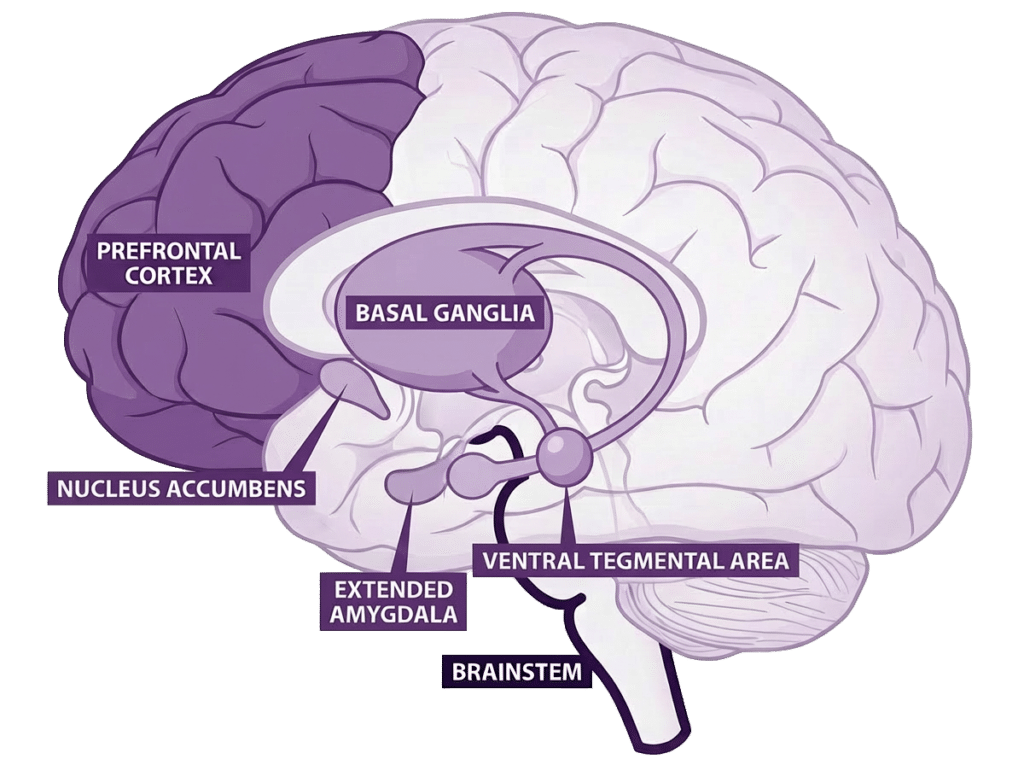
Drug and alcohol use directly impacts multiple areas of the brain that are responsible for emotion, executive functioning, stress response, and basic vital functions.
Extended Amygdala
The extended amygdala is the brain region responsible for processing stress and emotions. Addiction leads to the activation of stress neurotransmitters, which overwhelm the brain with stress when drugs are used. This increase in stress neurotransmitters occurs even in non-drug-related stressors, leading to an exaggerated stress response to everyday stressors. This exaggerated stress response in the amygdala drives motivation to continue compulsive drug use as a way to calm the brain and relieve the feelings of stress, especially during withdrawal, when the person experiences overwhelming irritability and anxiety.
Basal Ganglia, Ventral Tegmental Area, And Nucleus Accumbens
The brain’s reward system comprises the ventral tegmental area (VTA), located in the midbrain, and the basal ganglia, which include the nucleus accumbens.
Dopamine produced in the VTA travels to the nucleus accumbens to reinforce healthy behaviors like eating, exercise, and social connection through small bursts of pleasure. Drugs and alcohol disrupt this system by triggering unnaturally large releases of dopamine, which flood the reward pathway.
Over time, the nucleus accumbens becomes less sensitive to dopamine, making everyday activities feel less rewarding while the brain becomes increasingly focused on seeking substances. This rewiring leads to tolerance, cravings, and compulsive substance use, even when the drug no longer produces the same pleasure.
Prefrontal Cortex
The prefrontal cortex is responsible for decision-making and impulse control. Addiction dysregulates the reward circuit and the stress system in the brain, creating chemical and structural impairments in the connections that bridge communication between the reward center and the prefrontal cortex.
Instead of planned-out decisions, the person becomes compulsive in their decision-making and behaviors, resulting in actions such as drunk driving, overspending, unsafe sexual behaviors, or aggression.
Brainstem
The brainstem is responsible for vital functions such as breathing, heart rate, and sleep. Drugs such as opioids, benzodiazepines, and alcohol can cause diminished brainstem function. The brainstem is the primary center that is negatively impacted by intoxication and overdose.
Why Are Drugs More Addictive Than Natural Rewards?
Alcohol and drugs are more addictive than natural rewards, such as running or chocolate, because drugs and alcohol flood the brain with dopamine. In contrast, natural rewards produce small, short bursts of dopamine.
Research has shown that drugs and alcohol produce up to 10 times as much dopamine as natural rewards, therefore “hijacking” the brain’s reward system and flooding the nervous system with dopamine.
This creates a strong memory to rewire the brain to develop intense cravings and urges to compulsively use drugs to feel the desired flood of euphoria. This flooded sense of euphoria from drugs and alcohol desensitizes the brain to pleasure, and as a result, natural pleasure experiences no longer create a sense of satisfaction.
How Does Long-Term Drug Abuse Affect The Brain?
Addiction can result in dramatic long-term changes in the brain that can still be present even if the person stops misusing drugs and alcohol. Effects of long-term drug use include:
- Impaired decision-making abilities, focus, concentration, and responses to stressful situations.
- Inhibited brain growth and maturation in children and adolescents.
- Mental health disorders such as depression, anxiety, bipolar disorder, and schizophrenia.
- Impacted learning ability, emotional responses, and memory.
These negative changes can impact a person’s professional life, making it difficult to perform their job, negatively affect their financial health and personal relationships, and even alter how they engage with hobbies and interests they once loved.
How Does A Drug Overdose Affect The Brain?
An overdose directly impacts the brainstem, the area of the brain responsible for vital functions such as breathing, heart rate, and sleep. Alcohol, opioids, and benzodiazepines are central nervous system depressants, and when someone overdoses on one of these substances, it directly affects the brainstem.
One of the key symptoms of overdose is depressed respiration or slowed and shallow breathing, which can affect the amount of oxygen that reaches the brain and other vital organs.
When the brain is starved of oxygen due to inhibiting brainstem functions such as respiration, this hypoxia can result in death, coma, and permanent brain damage.
Explore These Featured Centers
Can The Brain Recover From Addiction?
Fortunately, neuroplasticity is ever evolving, and through evidence-based addiction treatments such as cognitive behavioral therapy (CBT) and medication-assisted treatment (MAT), people can learn new, healthy skills and coping mechanisms that positively reinforce recovery.
These newly learned positive behaviors can rewire the brain, leading to healthy and positive synaptic changes. Brains can undergo neuroplasticity in negative ways, as seen in the example of addiction. Still, our brains can also change in positive ways when we adopt healthier habits and behaviors through addiction treatment.
It can take up to two years for the brain to recover from drug use, and the extent and timeline of brain recovery depend on the severity of the addiction, the person’s age, and physical well-being.
Find Support For Addiction
Struggling with addiction can have devastating and complicated long-term effects on the brain. The best way to overcome substance use disorders is to get professional addiction treatment. This allows individuals to get unique treatment, physical and psychological help, and a deeper understanding of their addiction. To learn more about your treatment options, explore our rehab directory or contact a treatment provider today.