Teenage Drug Abuse And Addiction
Many addictions develop from drug abuse that starts during adolescence. The teenage brain is still developing, putting adolescent users at an increased risk of addiction.

Author Kristen Fuller, MD
Teen Drug Abuse
In the United States, teen drug abuse and addiction are on the rise, and recent studies have shown that alcohol, marijuana, and nicotine are the most commonly used substances among teenagers.
The teenage brain is still developing, so drug use during this critical developmental period has consequences in many aspects of a teen’s life. Drug abuse among teenagers can lead to health problems, memory challenges, attention deficits, poor academic performance, low self-esteem, and poor social skills.
Teenagers who experiment with substances put their health and safety at risk, which is why discussing drug use in teenagers is crucial for parents, educators, and health professionals.
What If My Teen Is Experimenting With Drugs?
Some experts suggest that experimentation with alcohol or drugs is normal in teenagers, especially in social settings. However, unrestricted or frequent experimentation can become an addiction, especially if risk factors are present.
Common reasons teens experiment with drugs include:
- Curiosity
- Peer pressure
- Stress
- A desire to escape
Experimentation does not necessarily mean they have an addiction, but it should raise concern that it is time to have an open conversation with your teenager about substance use. You must arm them with information to keep them safe by educating them about signs of overdose, the importance of having open and safe conversations with parents or teachers, asking for help if they need it, and emphasizing the life-threatening dangers of certain drugs.
Parents and guardians can also help teens develop skills such as declining drugs in a way that makes the teen feel good. This helps empower the teen to believe that they can make good decisions while also acknowledging that factors like peer pressure and relationships play a significant role in the equation.
Signs Your Teen Is Using Drugs
Parents and guardians should educate themselves on the signs of drug use and take note when they notice these signs. If you see these signs, write them down and note the date and time you observed them, so you can address the issue. It is best to have a conversation with your teenager about their suspected drug use when they are not under the influence.
Some common physical signs of teen drug abuse include:
- Bloodshot eyes
- Nosebleeds or a runny nose
- Unexpected weight loss
- Skin bruising
- Poor hygiene
Additionally, common behavioral signs of teen drug abuse include:
- Change in friends
- Social isolation
- Decreased school performance
- Skipping school
- Personality changes
- Loss of interest in activities
- Avoiding eye contact
- Frequent hunger or “munchies”
- Laughing for no reason
- Secretive behavior
- Unusual tiredness
- Missing curfew
- Periods of high energy followed by extended periods of sleep
- Slurred or rapid speech
If these signs are present, it’s important to initiate a conversation with your teenager. One in five parents who suspect their teen is using drugs does not intervene to prevent further drug use. Your goal is to find out information so you can protect your teenager from harming themselves.
The best way to get a teen to communicate about their drug use is by asking compassionate and understanding questions. You want your teenager to trust you, to be honest with you, and confide in you. To do this, sit them down in a relaxed setting when they are not under the influence and tell them that you care about them, you want to support them, you are proud of them, you love them, and you are not here to punish or judge them.
Aim to ask questions in a non-threatening tone. Simply asking the question “Have you been using drugs or alcohol?” or “Has anyone offered you drugs recently?” can be enough to get the conversation started.
You can also ask questions such as:
- “Do you have any interest in using drugs or alcohol?”
- “If you do choose to use drugs or alcohol, is it possible that you can share this information with me?”
- “Do any of your friends use drugs or alcohol?”
Teen And Adolescent Addiction
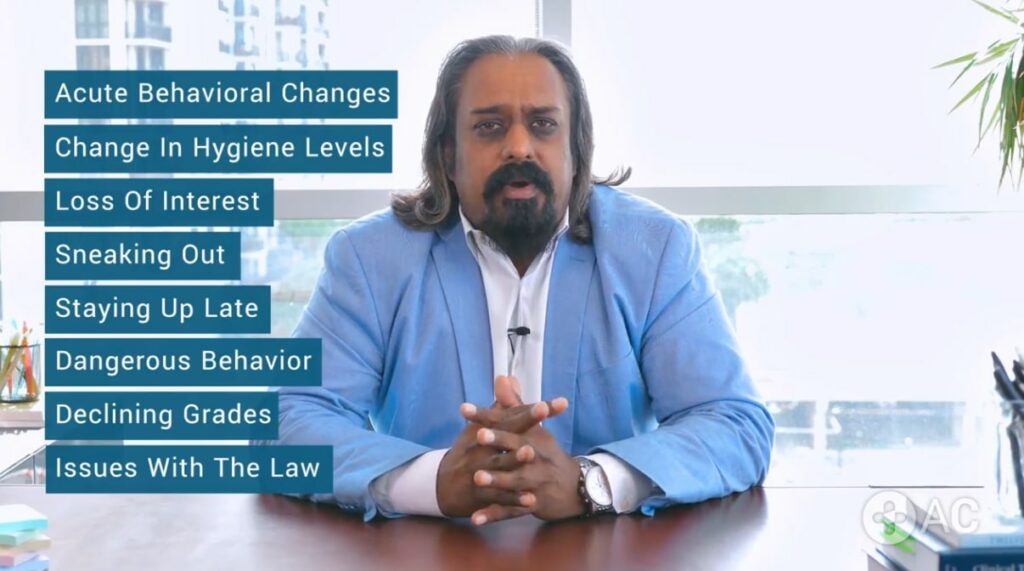
The warning signs used to determine if a teen or adolescent may have a substance use disorder are listed by Dr. Ashish Bhatt, MD.
If Your Teen Admits To Taking Drugs
If your teen admits to you that they are using drugs, be proud that they are being honest with you and thank them for their honesty. This is not an easy conversation for teenagers, so it is important that you recognize this.
Do your best not to overreact if your teen comes clean about using drugs. Overreacting or lashing out can prevent your teen from opening up about their experience. Getting your teen to talk is important in determining if their drug use was a one-time thing or if it’s becoming a problem.
Explain to your teenager how much you care about them and their future. Teens who feel supported and loved are also more likely to stop experimenting with drugs or seek help if they have an addiction.
If Your Teen Denies Drug Use
If your teen denies drug use and you have reasons to highly suspect they are using drugs, then explain that you are concerned about their well-being. It’s important for your teen to know that you trust, support, and care about them deeply.
If they continue to deny drug use, then consider doing an in-home drug test. If the drug test comes back positive, try to figure out why they are using drugs and why they lied to you. Are they scared? Are they struggling in school? Are they being bullied? Do they have a problem with drugs that is bigger than you can address? You may want to consider consulting a therapist to determine if there is a more significant underlying issue that warrants professional help and guidance.
It’s essential to explain to your teenager the importance of being open and honest about their drug use because you want to help them. It is easy to become defensive and angry, especially when your teen is lying to you about drug use. Still, it is essential to remain supportive and empathetic towards your teenager.
Risk Factors For Teen Drug Use
Common risk factors for teen drug abuse include:
- Family history of substance abuse
- Peer pressure
- Mental health disorders such as depression
- Being around friends who use drugs
- Lack of social connections in school (social isolation)
- They want to perform better in school or athletics
- They want to feel good (the euphoric feeling from the dopamine brain pathways)
- They want to experiment
- Easy access to drugs (at home or from their friends)
- Lack of parental supervision
- History of childhood trauma
While presenting these signs does not guarantee that your teenager has issues with substance abuse, exhibiting one or more can indicate a larger problem with substance misuse.
Which Drugs Do Teens Most Commonly Abuse?
The drugs most commonly abused by teens do not differ much from those abused by adults. However, the reasons for abuse are different, as teens often abuse a substance based on its accessibility. If a substance is widely acceptable (legal and easy to buy or find), teens are most likely to use that substance.
Teens are also more likely to use excessive amounts of the substance because they do not fully comprehend the risks and dangers of drugs; in other words, their perceptions are a bit blurred due to their brains not being fully developed. Teens are also more susceptible to peer pressure because they want to fit in socially, and they are in an experimental stage of their lives, trying to figure out who they are.
Alcohol, marijuana, and nicotine vaping are the three most commonly abused substances among teens. After these top three substances, the most frequently used drugs differ based on age group. In younger teens and children (6th to 8th grade), inhalants are more commonly used. These include household cleaners or glues. Older teenagers are more likely to report synthetic marijuana use known as K2 or spice, hallucinogens, and prescription stimulant pills such as methylphenidate (Adderall).
Teen Alcohol Use
Alcohol is the substance most commonly abused by teens. It can be easily purchased or found in parents’ homes or at parties, and therefore, it’s commonly misused by teens. The social acceptance of drinking among people of legal drinking age can lead many teens to view alcohol as relatively harmless, which is another reason for its common abuse among teens.
When it comes to alcohol misuse and abuse in teens, binge drinking is the leading concern. Binge drinking is a harmful consumption pattern, and nearly 90% of all alcohol consumed by teenagers occurs during a binge episode. This is most likely because a teenager’s impulse control has not fully developed.
Binge drinking is defined as a pattern of drinking that raises the blood alcohol concentration to at least 0.08 grams of alcohol per deciliter. This typically corresponds to 5 or more drinks for men and 4 or more drinks for women in 2 hours, and even fewer for teenagers, as younger age is a factor. However, when it comes to teenage drinking habits, teens commonly drink from the bottle or pour their own drinks, meaning that one drink for them is most likely much stronger than a “standard” drink for adults.
Binge drinking can often lead to vomiting, alcohol poisoning, blackouts, poor decision-making that can result in unsafe sex, driving under the influence, accidents, and injuries. Binge drinking increases the risk of alcohol addiction for people of any age. Because of its dangerous consequences and risk for addiction, teenagers should always be discouraged from binge drinking.
The Monitoring the Future Survey on Drug Use is a long-term study of substance use conducted by the U.S. National Institute on Drug Abuse on adolescents in the United States. This survey reported that in 2023, by 12th grade, 46% of adolescents had tried alcohol in the past year, 33% had been drunk in the past year, 24.3% had consumed alcohol in the past 30 days, and 10% had consumed more than five drinks in a row in the prior 2 weeks.
Featured Centers Offering Addiction Treatment for Teens
Teen Marijuana Use
Regular marijuana users most often start during their teenage years, and most high school seniors do not think smoking marijuana occasionally carries any risk. Since the widespread legalization of marijuana, the perception of harm has drastically decreased. It’s easy to purchase cannabis in many forms (edibles, flower, tincture, etc.) from a dispensary in most states. Because of this easy access, it is one of the most widely abused drugs among teenagers.
The level of THC in marijuana is much stronger today than in previous generations, and because of this high potency, there is an increased risk for disordered use. In 2023, 30% of 12th graders reported using cannabis in the past year. Approximately 36.5% of 12th graders reported having used cannabis one or more times in their lives. The most significant increase in cannabis use is THC vaping. Statistics show that 13.7% of teenagers used THC vaping products in 2023, an increase from 4.9% in 2017.
Other statistics to consider:
- 6.9% of 12th graders use marijuana daily.
- 43.7% of 12th graders have tried marijuana in their lifetime.
Teen Nicotine Use And Vaping
Electronic cigarettes, also known as vapes, e-cigs, and e-cigarettes, are battery-operated “cigarettes” that turn liquid tobacco into a vapor that can be smoked. The most common active ingredients in e-cigs are either tobacco or THC.
Because electronic cigarettes are “vapor,” they are often marketed as safe or even healthier than regular cigarettes or joints of marijuana. However, they are highly addictive and carry many of the same health risks as regular smoking, such as lung cancer and mouth cancer, along with additional potential health concerns.
Today, vapes are commonly abused among teenagers, especially teenagers in the middle and upper class, as they are often used as a social status symbol in this age group.
According to the Monitoring the Future Survey, approximately 22.1% of 12th graders have tried e-cigarettes containing nicotine and other substances.
Prevention Of Teen Drug Use
Teenage substance abuse prevention starts at home. Parents can be a crucial first line of defense against substance abuse. While no prevention plan is foolproof, starting open and honest conversations can play an important role in reducing the risk of teen drug use.
Teenagers are exploring their identities, which involves how they treat their bodies. A newer holistic approach to teen drug abuse is to impress upon teenagers that the healthiest way to live life and to find their identity is not to put harmful substances in their bodies.
There is no guarantee that your child won’t use substances, but it is less likely to happen if you:
- Start having conversations earlier, as kids absorb information and are generally more curious the younger they are.
- Talk openly and often about drugs and alcohol and how they can affect someone’s life.
- Focus on how drugs and alcohol can affect their brain and body rather than the negative moral and legal consequences. Remember that it’s important to impress upon your teenager the healthiest way to live life.
- Set rules and boundaries around substance abuse.
What Do I Do If My Teen Is Using Drugs?
While it can be alarming to find out that your teen is using drugs, approaching the situation calmly is the best place to start. Then, you can continue to:
Ask questions and approach the conversation with curiosity: Instead of getting angry or pretending you have all the answers, it is important to try to understand why your teenager is using drugs.
Ask open-ended questions, such as “What’s going on at school that is bothering you?” or “Can you tell me a little more about your friends and what you are going through?” Questions like these can spark conversation without condemnation and lead your teen into a deeper conversation.
Listen: It is hard to hear that your teenager is using drugs, and your first instinct may be to shut down, get angry, become defensive, or try to take control. However, it is important to listen to your teenager because if they are saying that they have used drugs, they most likely want you to know for a reason.
Empathize and show compassion: You don’t want to encourage your teen’s drug use; instead, help them find healthier ways they can cope, but first, it is important to empathize with what they are going through. Being a teenager is difficult and awkward, and as adults, we all should empathize with this life stage.
Let your teenager know that you care about them, that you’re sorry they are going through these things, and that you feel for them. It is important that your teenager feels heard, understood, and validated, so they can continue to open up to you and respect your opinion and guidance.
Make a plan to correct the behavior and set boundaries: It’s important to set clear boundaries and consequences regarding substance use with your teenager. You can seek guidance from a therapist if you are not sure about your policy and how to enforce boundaries.
If you catch your teenager lying or breaking curfew, you can restrict their phone or television time. You can also set consequences if you find out your teenager is doing drugs or drinking, if you have a no-substance policy in your home. You also want to empower your teen to make healthy choices and reward them with words of encouragement when they do so. A simple “thank you” for being honest can go a long way.
Discuss treatment options: If your teen’s substance use has developed into dangerous patterns of abuse and addiction, seeking professional treatment is essential. Teenage addiction treatment utilizes age-specific and evidence-based therapeutic techniques in teen inpatient and outpatient settings, allowing teens to receive individualized treatment unique to their situation. Reviewing these options with your teen can help them realize they do have options to live a healthier, substance-free life.
Find Treatment For Teen Drug Abuse
If your teen is struggling with substance abuse, it is important to help them get the treatment they deserve to get their life back on track.
If you’re ready to explore your rehab options, use our rehab directory where you can easily search by location and insurance to find treatment centers that have special programs for teens. Remember, healing is possible, and an addiction-free future for your teen can start today.